Schlagwortarchiv für: ancient egypt

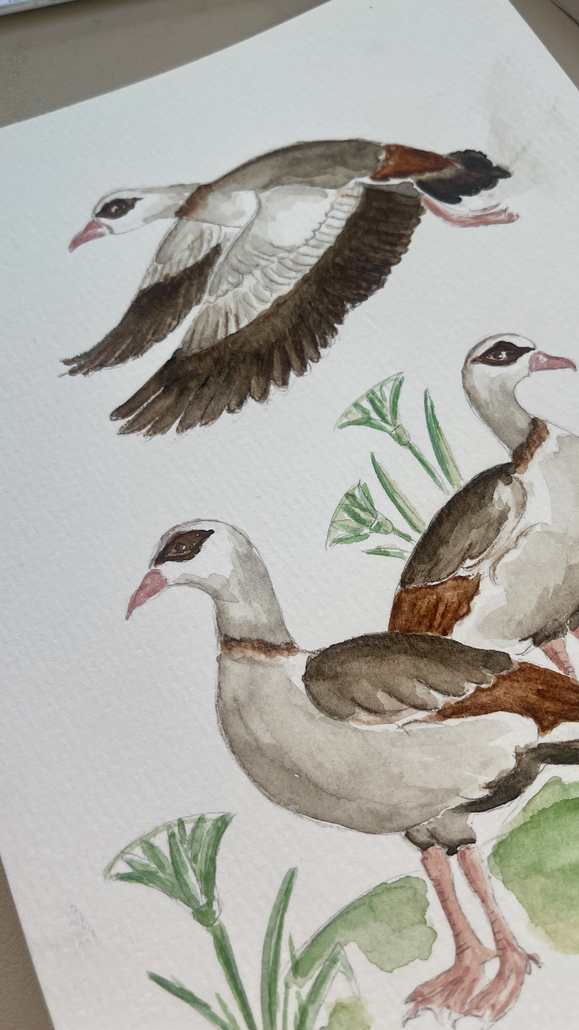
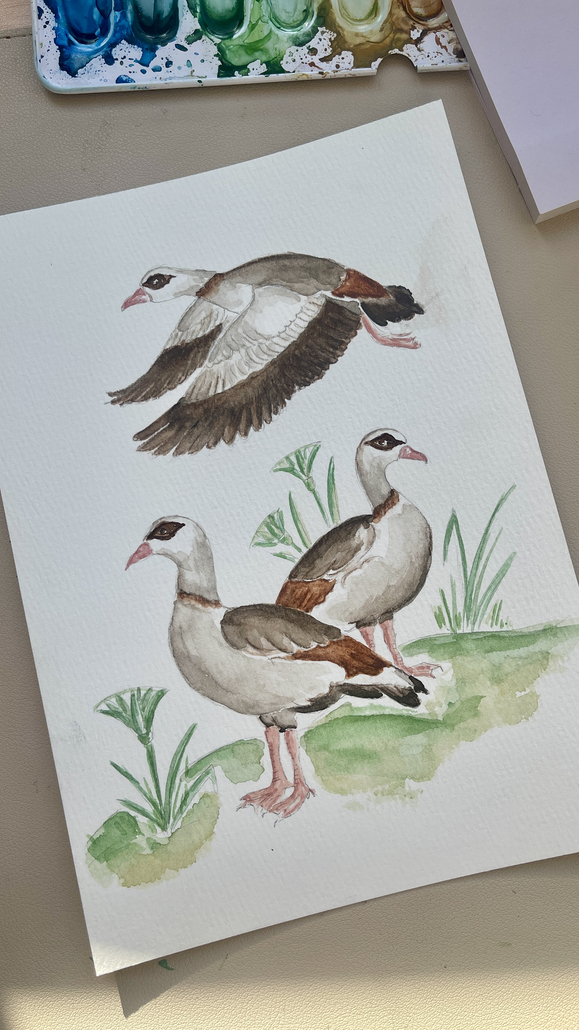
Nile geese have been around for thousands of years. Yes, they obviously come from the Nile, and they’re depicted in wall decorations in many ancient Egyptian tombs, but here in Germany, they’ve now made themselves at home. I was walking along the Rhine recently and was actually amazed that these very loud birds have become part of the cityscape. I think they’re beautiful. I love the various shades of brown and orange in their plumage and that funny “ninja eye mask.” 🤭😎
*Watercolor on cotton paper. Created as an illustration for a childrens book about ancient Egypt.
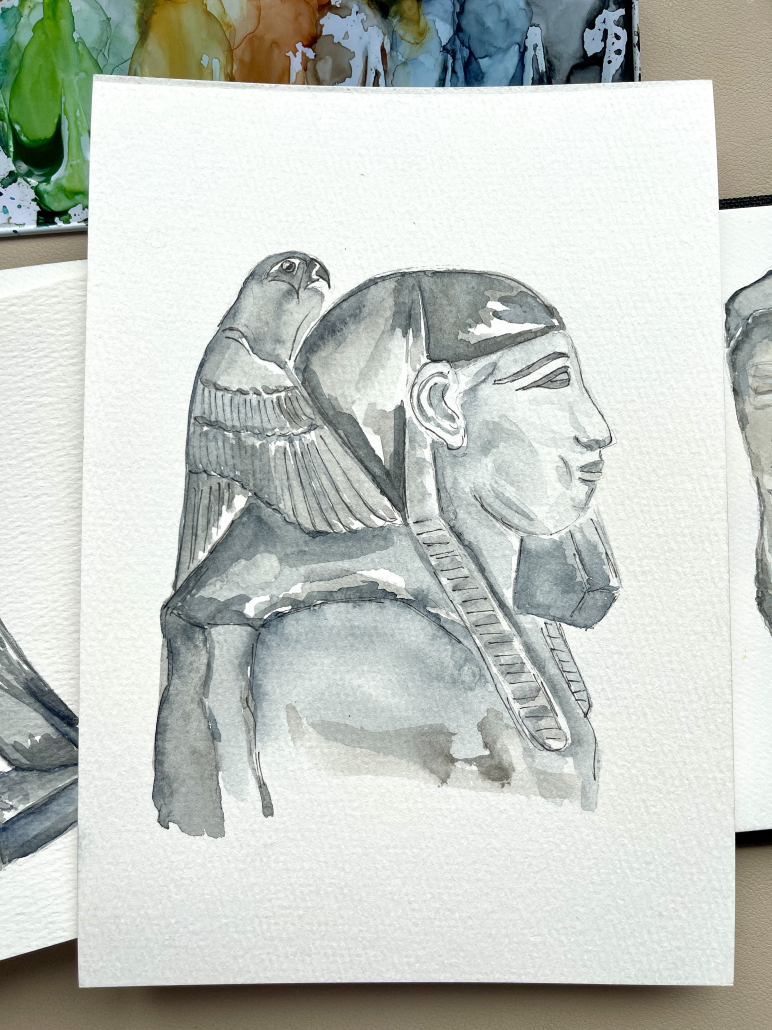
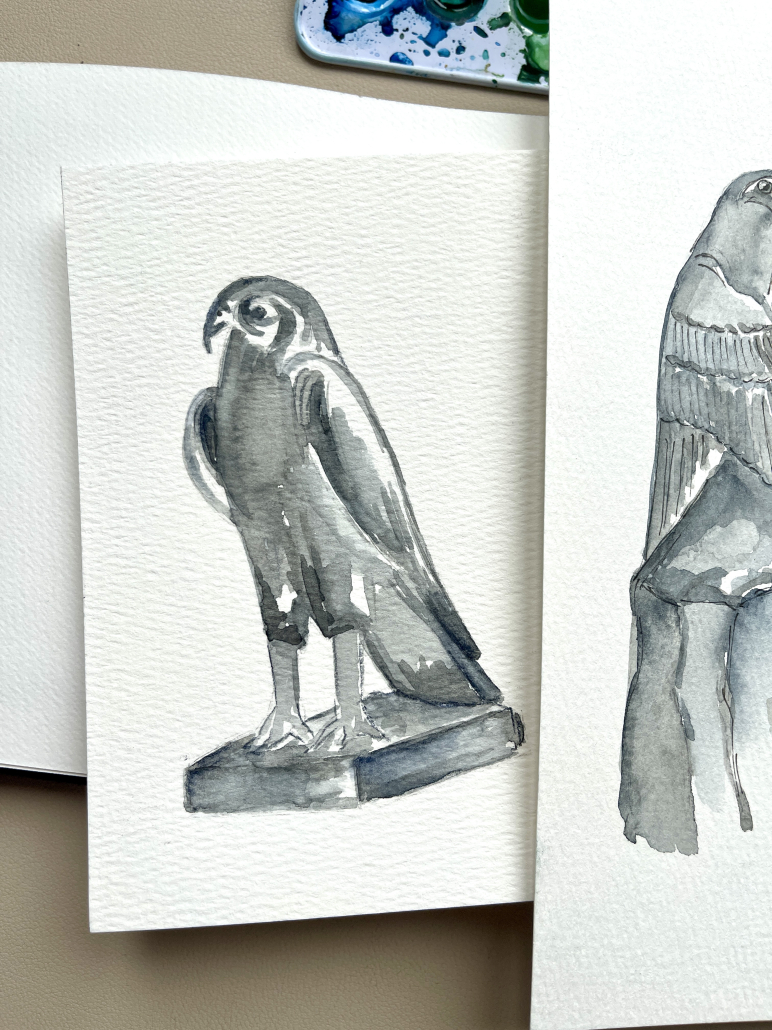
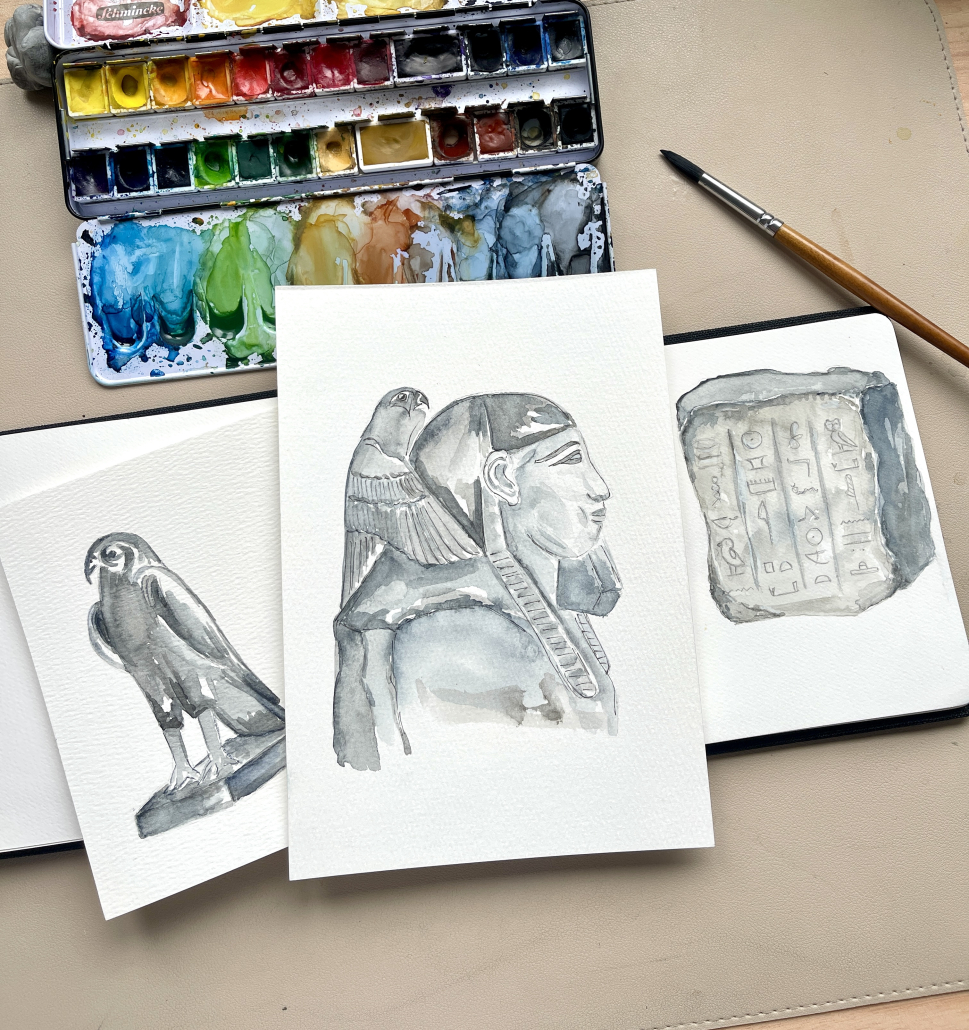
Today I tried my hand at painting stone textures in watercolor. It wasn’t that easy. There are warm and cool shades of gray. Smooth surfaces, rough ones, or chipped ones. Not all grays are the same. Wasn’t there even a movie about there being 50 shades of it? ;)

Well, maybe they helped out or inspired the Egyptians to build one themselves, because what you actually see in Egypt is an evolution of pyramid shapes over a long period of time. That means—they, too, figured out through “trial and error” what the angle of inclination needs to be to achieve a stable pyramid shape. If aliens had been directly involved in the construction, you’d have to assume they knew what they were doing, right? 

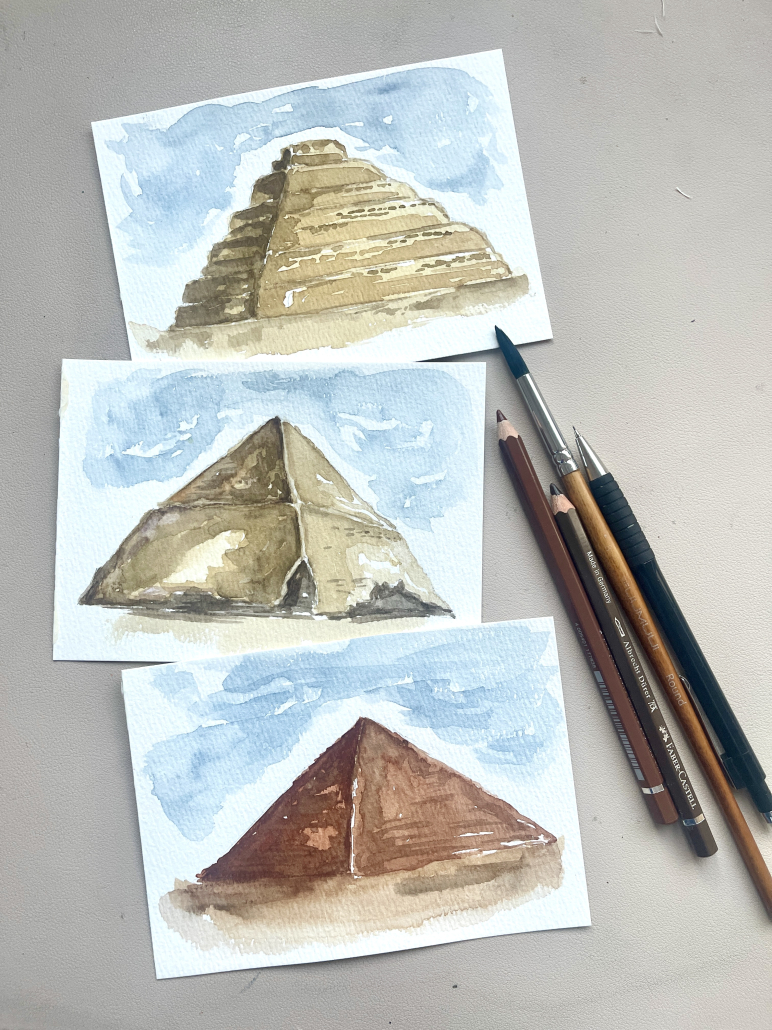
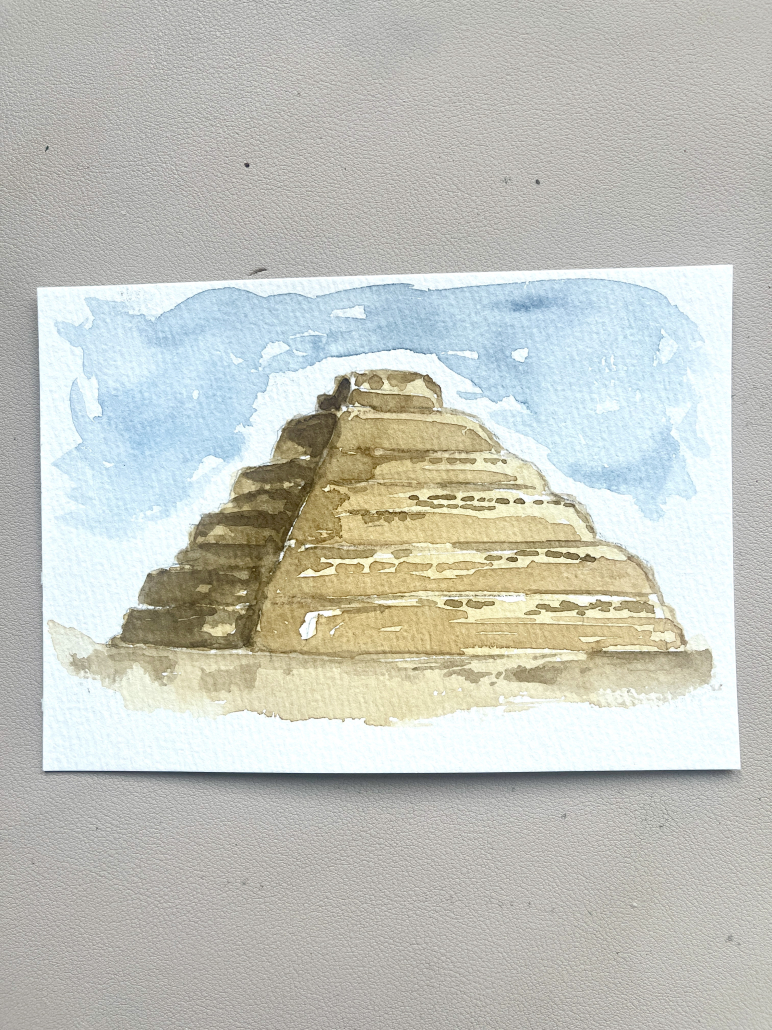
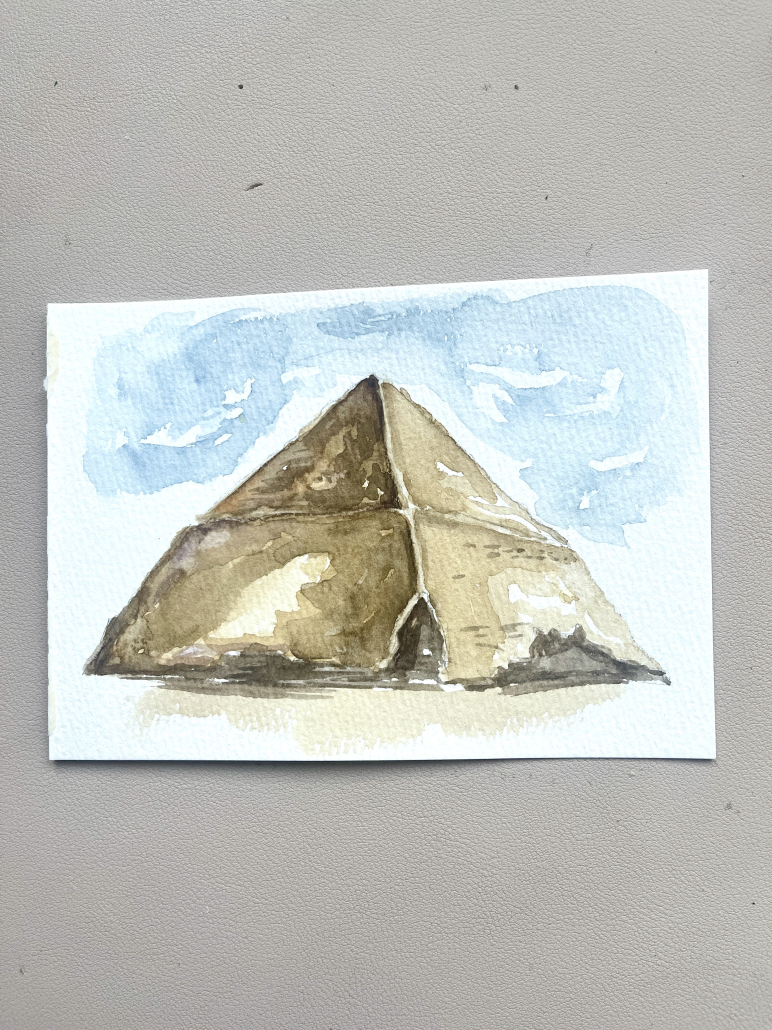
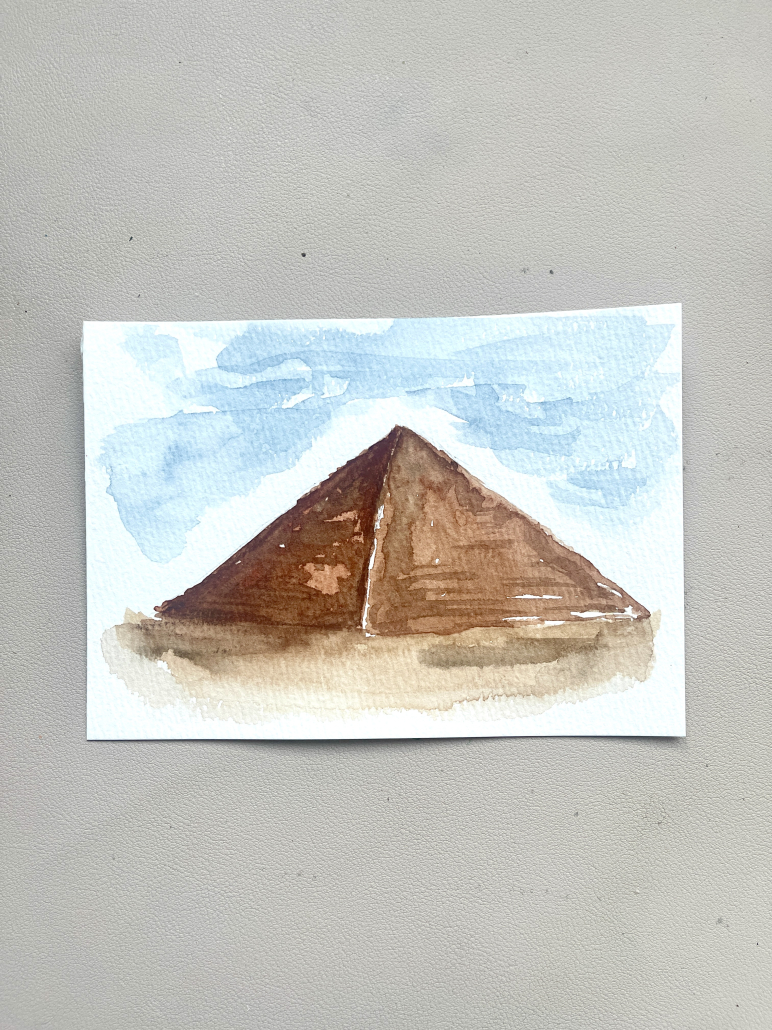
In any case, here’s a watercolor illustration for my children’s book about ancient Egypt that shows the evolution of pyramid shapes. So we also have step pyramids and a pyramid that’s bent because, halfway through construction, they realized the angle was too steep. And to save the structure, the angle was quickly adjusted right in the middle. 

Below you can see Sneferu’s Red Pyramid. For anyone who’s been there: you can go inside, but you actually have to go DOWN—and you have to waddle like a duck. You’ll never experience muscle soreness like that again in your life. 😂

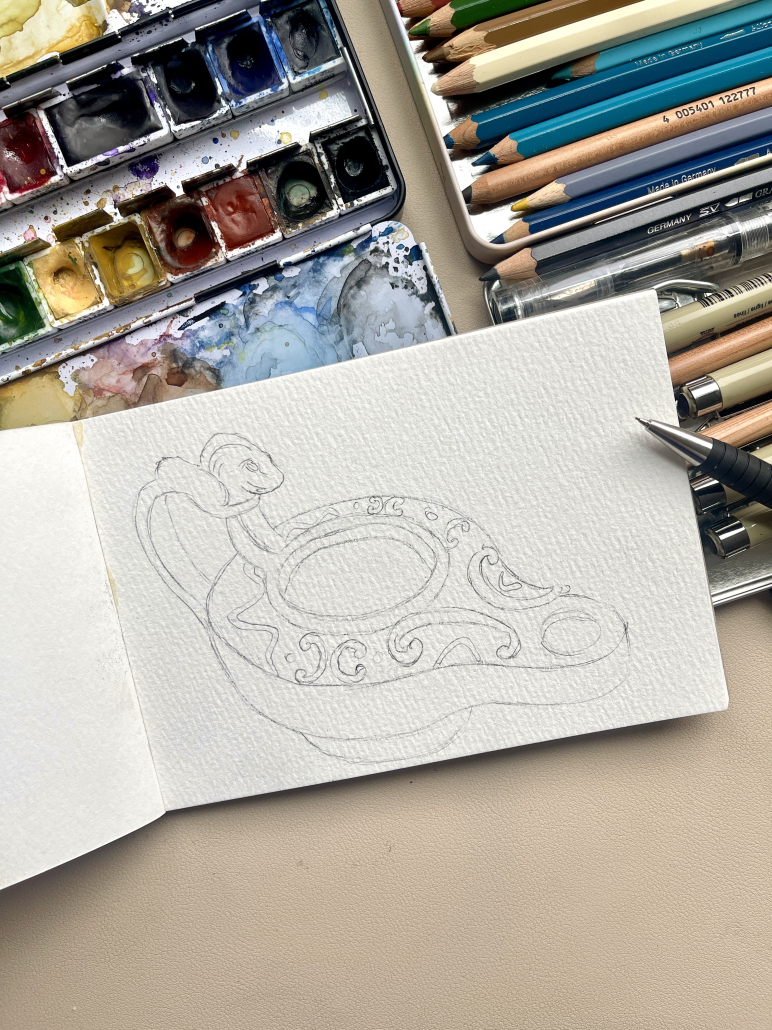
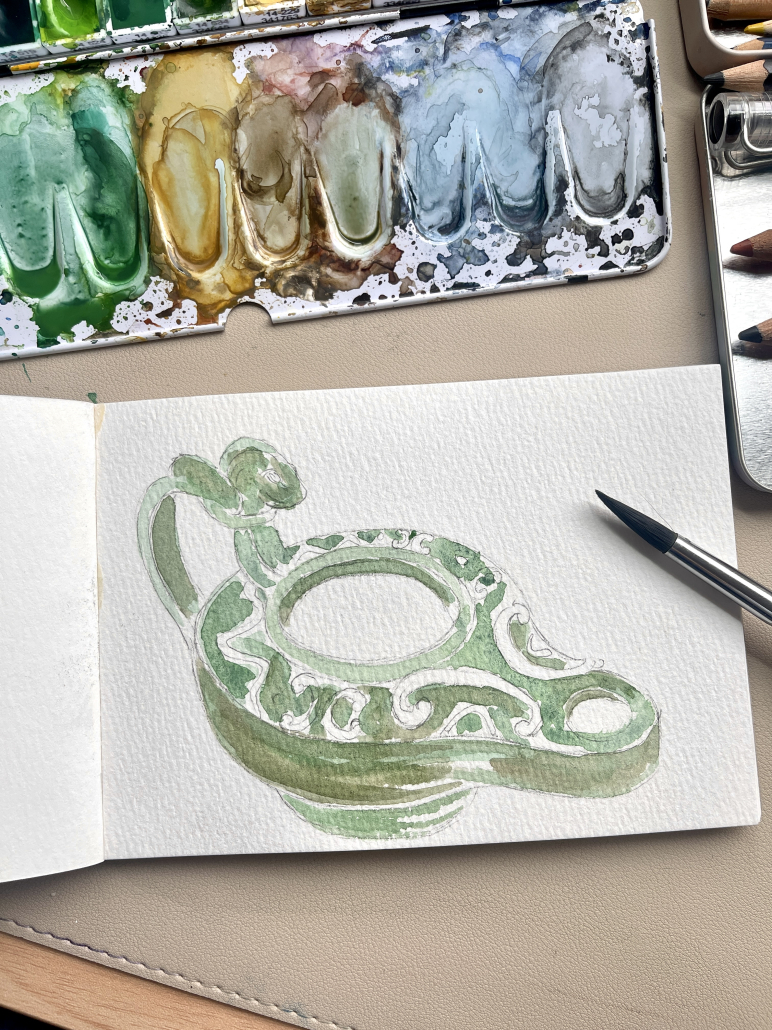
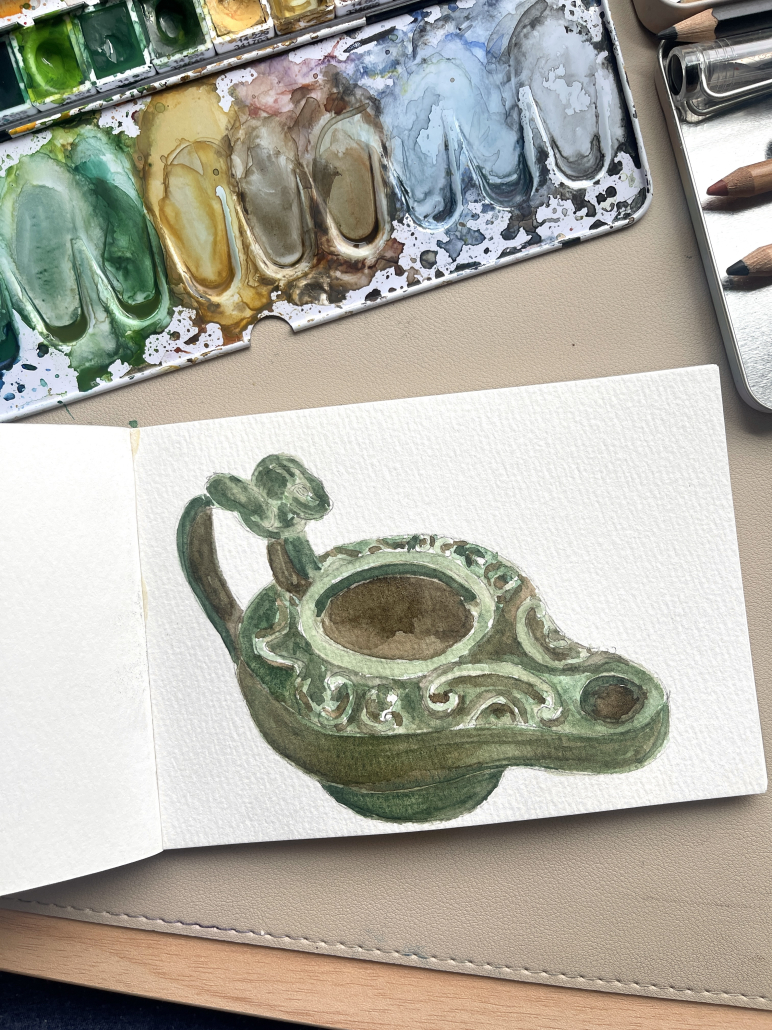
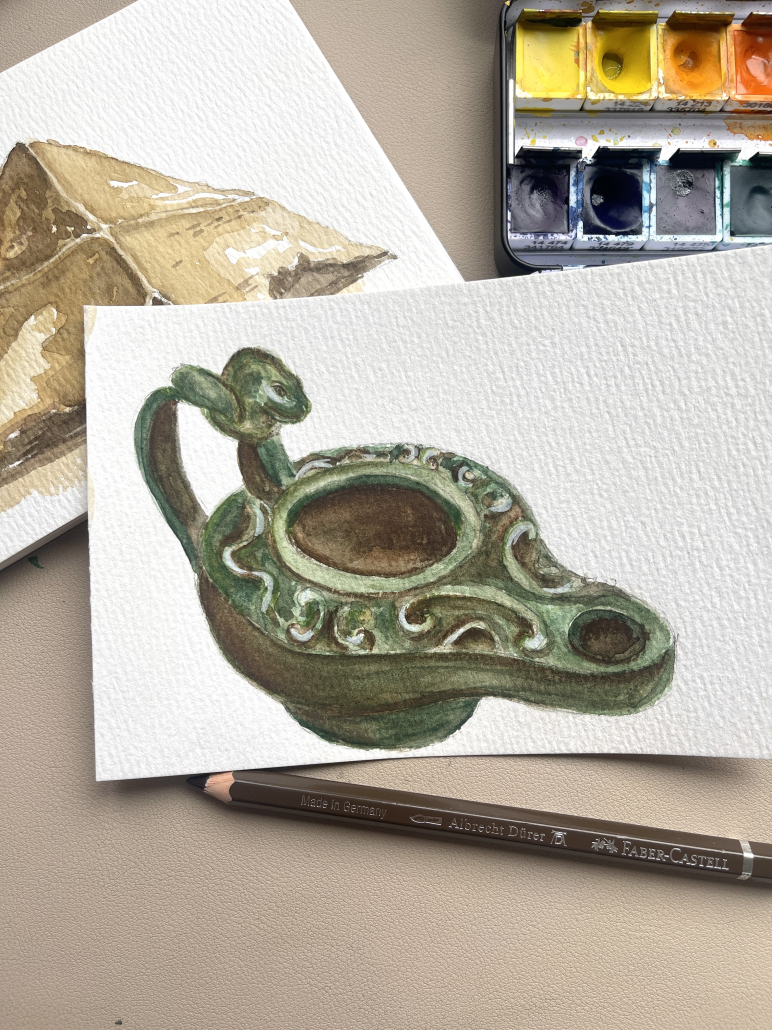
Today, I dedicated a good chunk of the day to painting and „knocked out“ a few illustrations I still had on my to-do list. The subjects ranged from pyramid shapes to an ancient oil lamp with a green copper patina—it was quite a mix. Right now, I’m racking my brain over how to illustrate the introduction to the „Mythology“ chapter—in addition to the depictions of the gods. Maybe the goddess Isis with her protective wings spread over a pyramid?

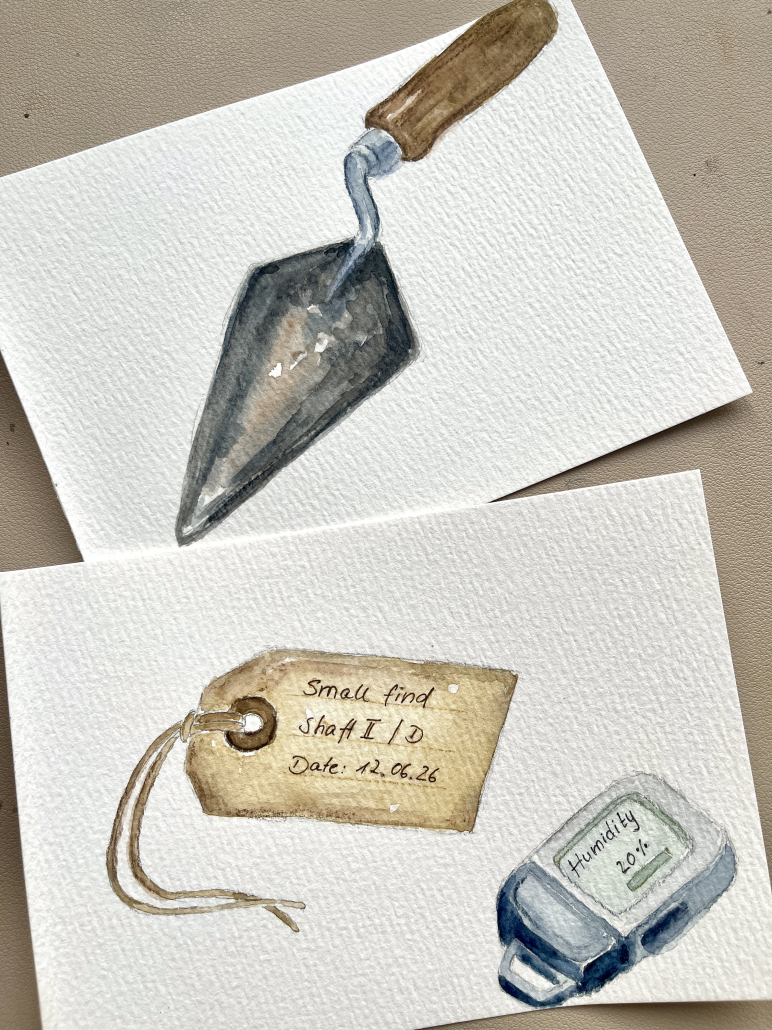
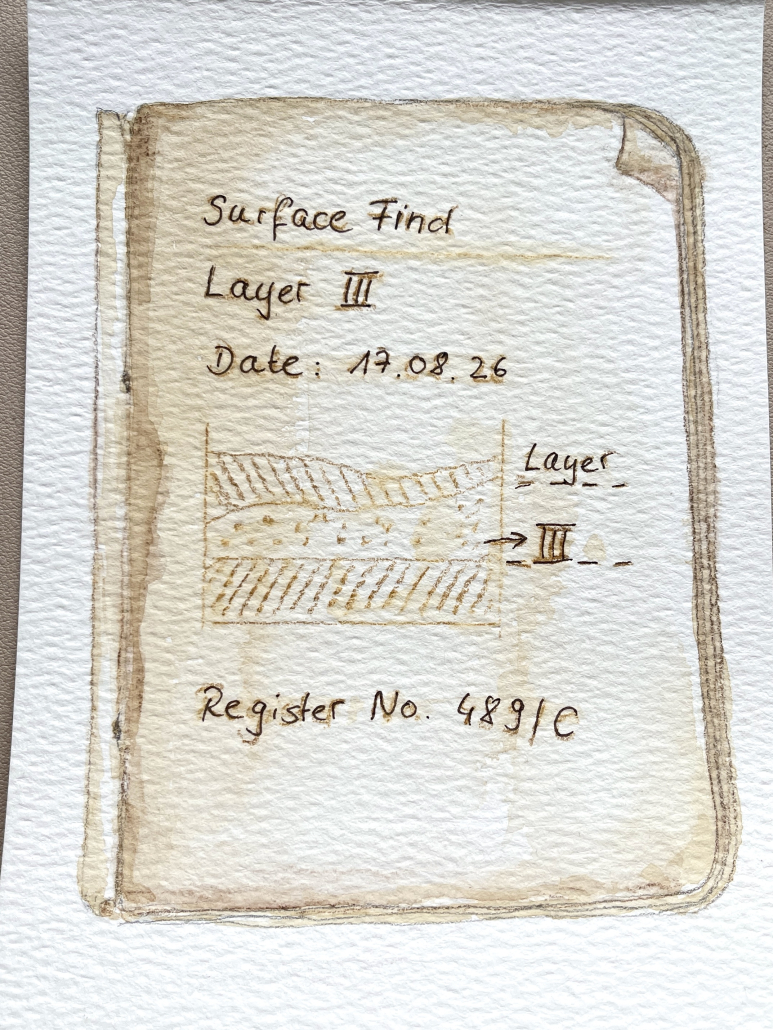
I am currently painting many small illustrations themed around archaeology and my fieldwork as an Egyptologist, because my children’s book on ancient Egypt will feature a special little highlight in every chapter: a personal note written from my perspective as an Egyptologist. I’m sharing something I experienced—something I found particularly fascinating—during my travels in Egypt. Naturally, these moments need to be beautifully illustrated.

For this, I’ve used new watercolor paper. This time, it’s 100% cotton paper, and I have to say—the difference compared to cellulose paper is simply huge. I plan to paint exclusively on cotton paper from now on, even if it means a higher investment. It’s worth it!

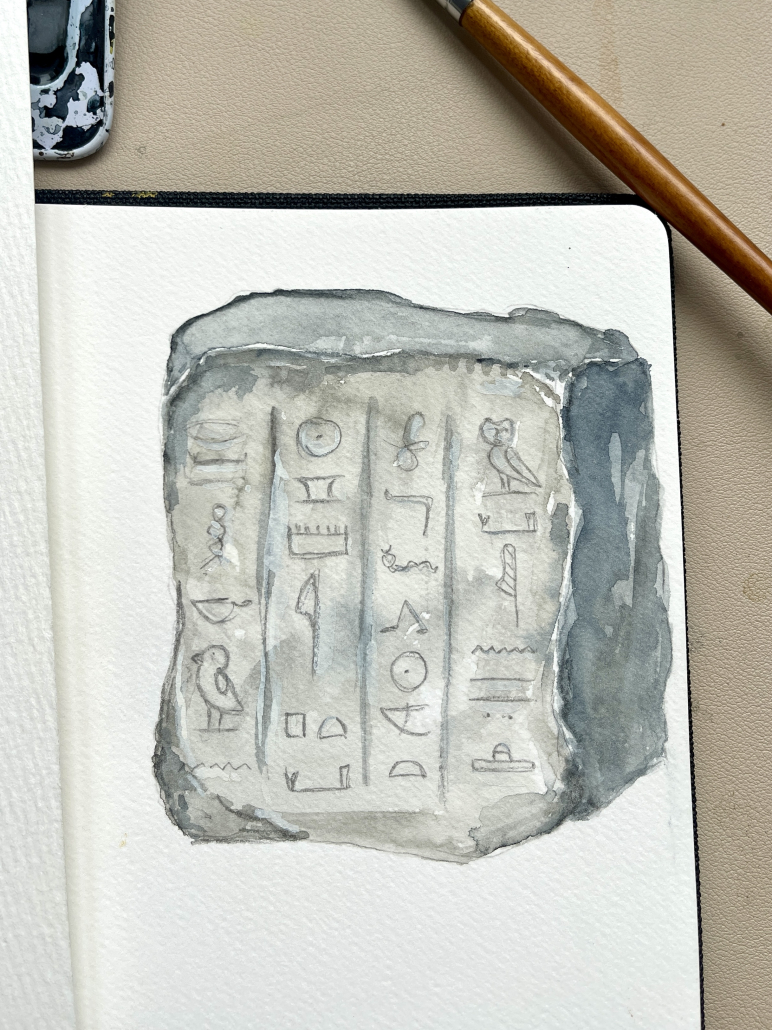
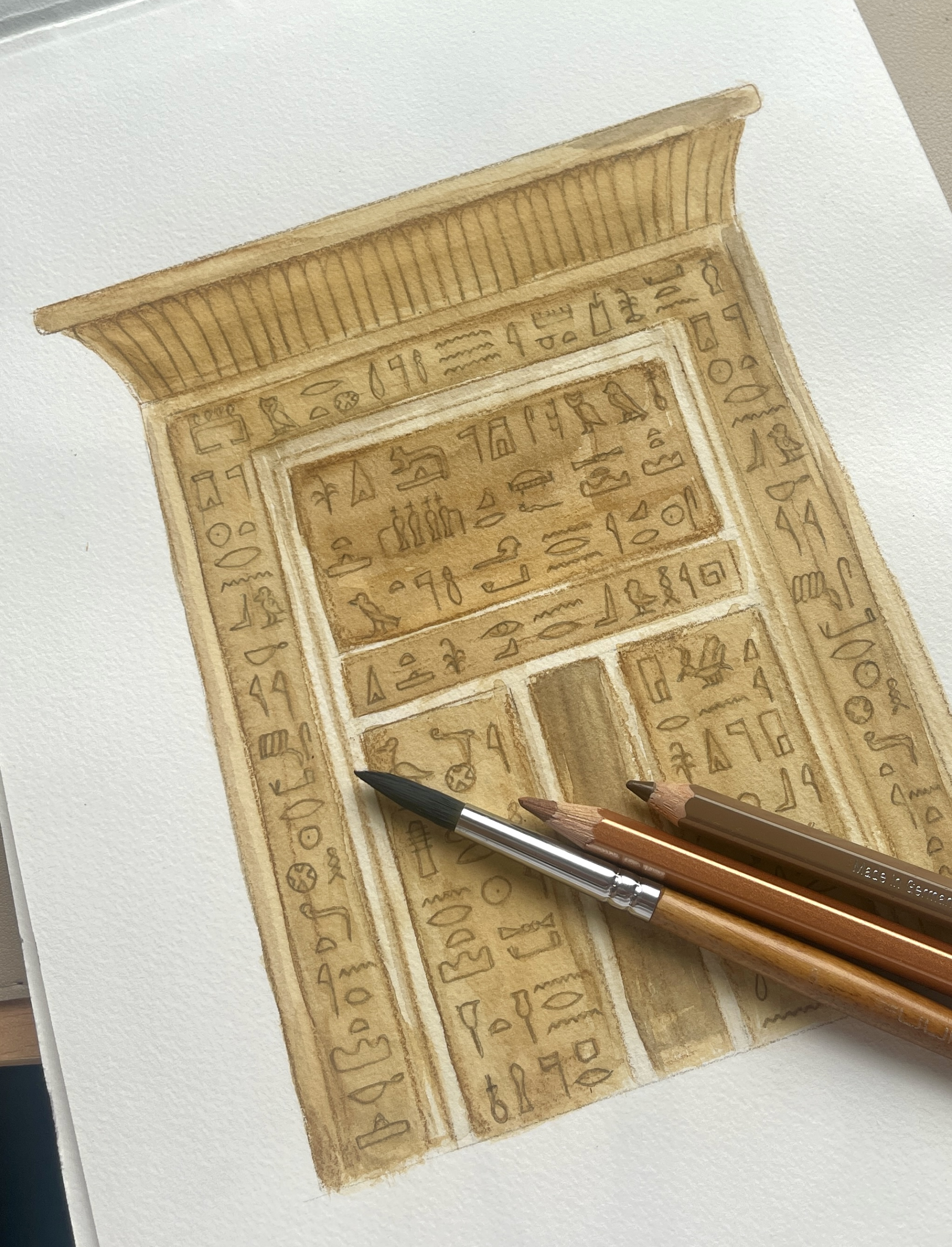
There are days when I’m super creative and can barely keep up with putting my ideas down on paper. And then there are days like this, when I just want to mindlessly copy hieroglyphs. I use this time for simple, repetitive tasks like this illustration here, which is meant to show that the ancient Egyptians really did use every little bit of space on a building or sculpture to fill it with writing. Here, I first sketched out the hieroglyphs with a fine pencil.


I’m not basing this on original texts, but I’m trying to write authentic hieroglyphs and create a natural-looking script, since this is a children’s book illustration and not a historically accurate reproduction of an artifact. After the preliminary sketch, I fill in the hieroglyphs with pigments from watercolor pencils, which I then activate with a little water at the end to create an antique look.
Do you ever have those days where you just can’t get anything done, but still have to do something so your feelings of guilt don’t get the best of you? ;)

My color palette isn’t getting any bigger right now, and I’m fine with that. I’m currently experimenting with different techniques in my sketchbooks. And sure, not all types of paper are suitable for watercolors, but that’s exactly why it’s just a sketchbook—a playground for letting my creativity run wild, a place where I can simply put down on paper whatever ideas come to me.

And I love the shades of blue and brown on white, cream-colored, or cappuccino-colored sketchbooks.
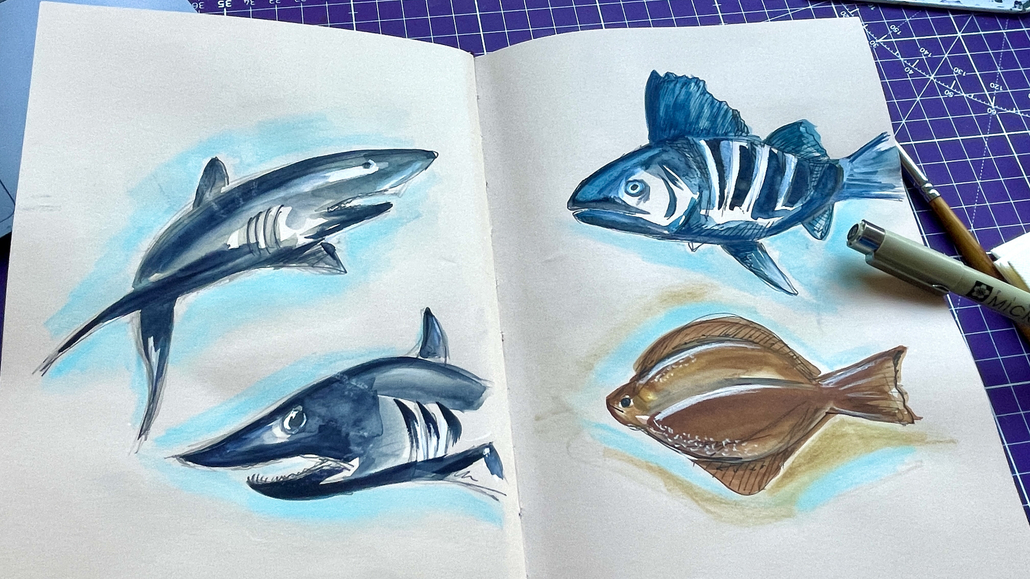
And my motifs don’t change either. My love for the maritime world is reflected time and again in the fish, shells, octopuses, and so on, while my soul is somehow drawn to antiquity. I’m still searching for the right surface texture for my next paintings, and before I “dare” to tackle larger formats, I’m still sketching around a bit.

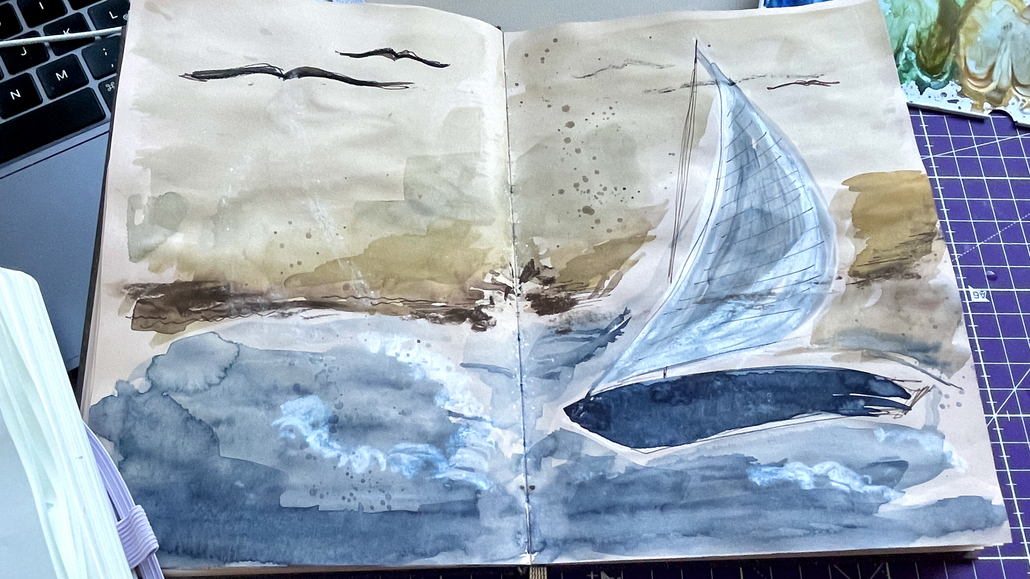
Watercolor and ink on a random journal page
Marine sketch in watercolor, pastell pencils & ink on Hahnemühle Cappuccino
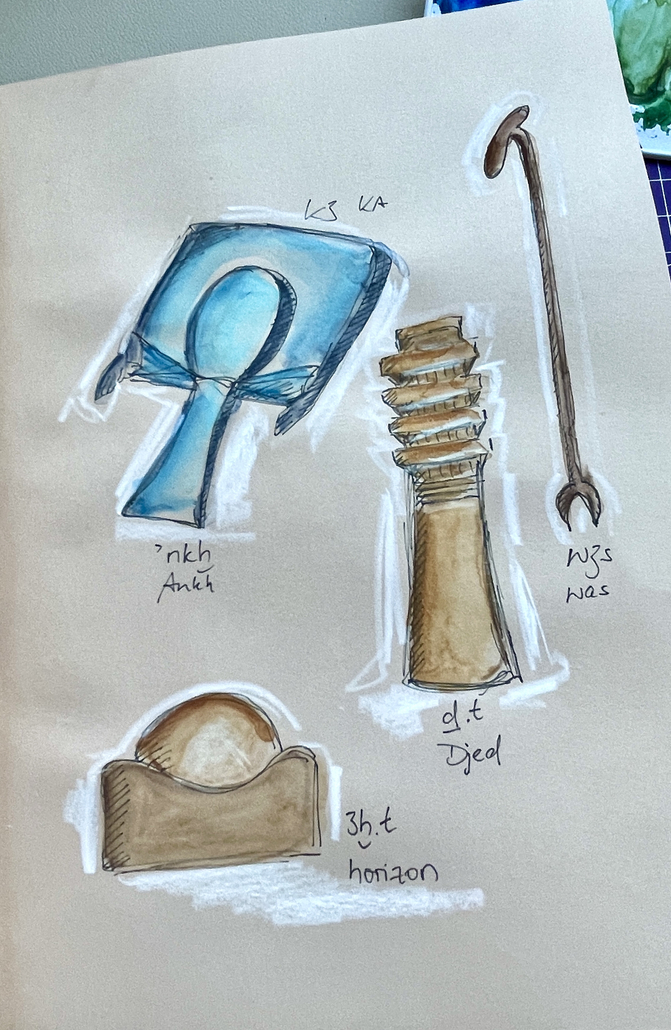
Aegyptiaca with Albrecht Dürer watercolor pencils & ink on Hahnemühle Cappuccino
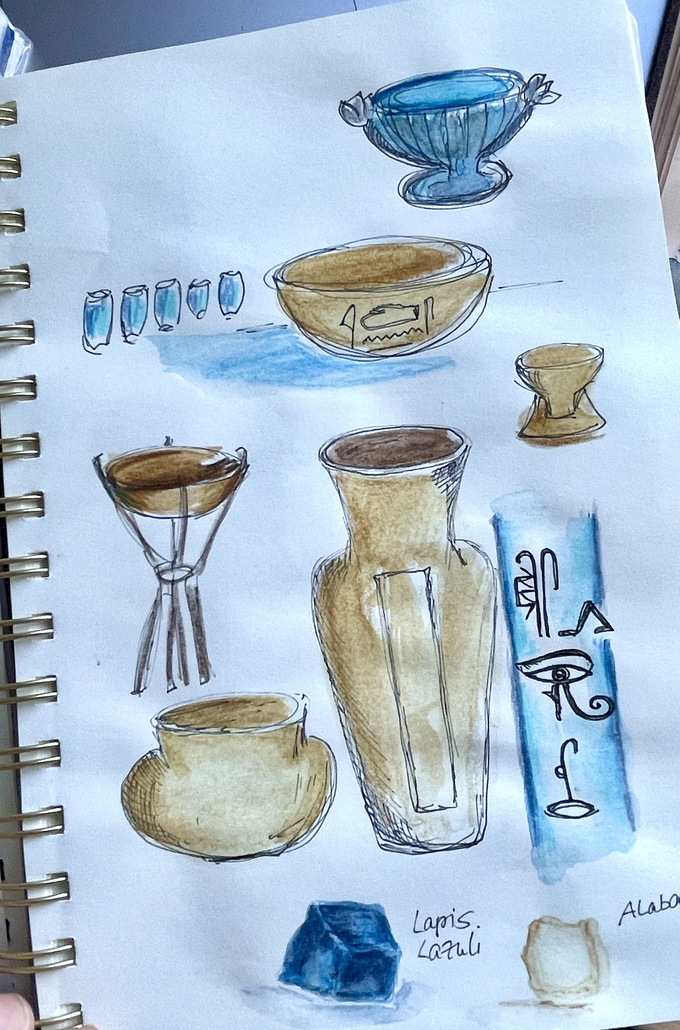
Aegyptiaca with Albrecht Dürer watercolor pencils & ink on a random journal page ;)

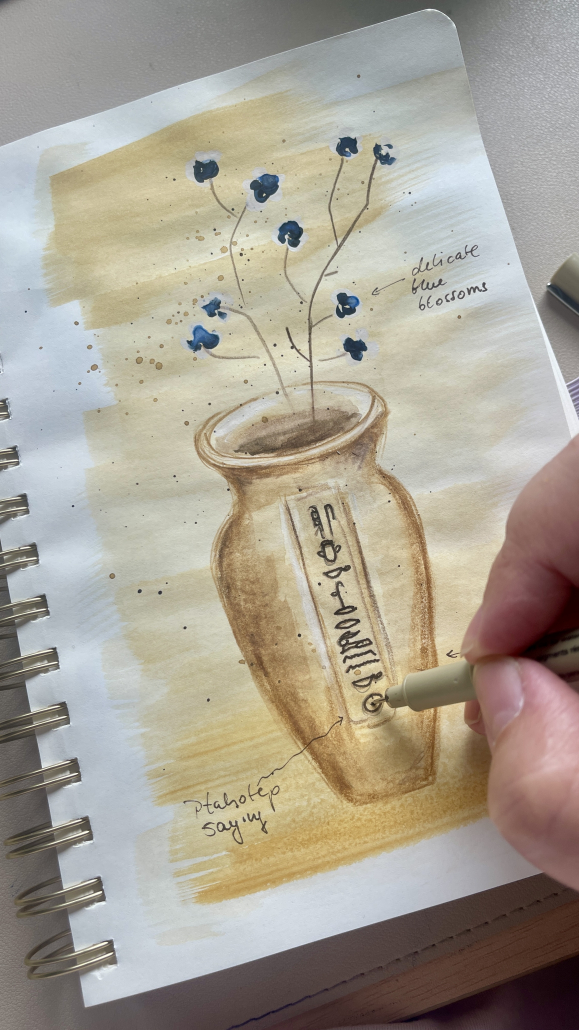
A simple sketch of the idea to inscribe an ancient Egyptian alabaster vessel with a message that means a lot to me. To bring it to life and connect it to the present, I’ve placed thin twigs with delicate blue blossoms inside it.

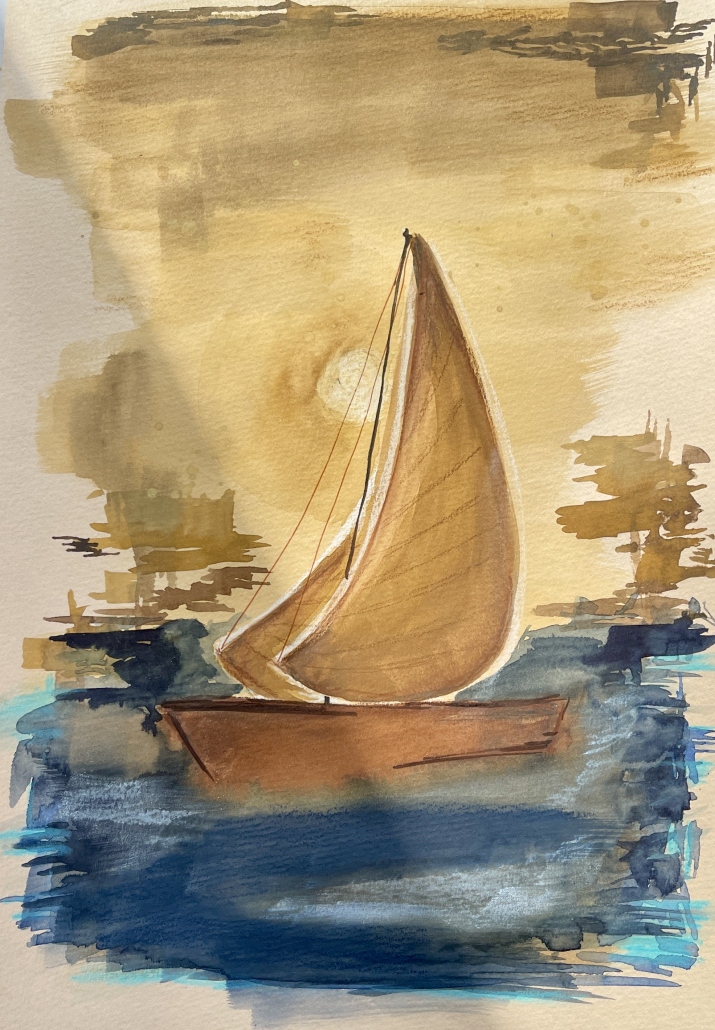
I love toned paper. It always gives a piece of art that vintage touch. But it’s also difficult to work with, because highlights can only be added using white, opaque materials. Here, I opted for white pastel pencils and chalk, which I blended together with watercolors and watercolor pencils. It was a small, quick experiment. Not perfect in technique but I LOVE the colors.